
Step Back in Time
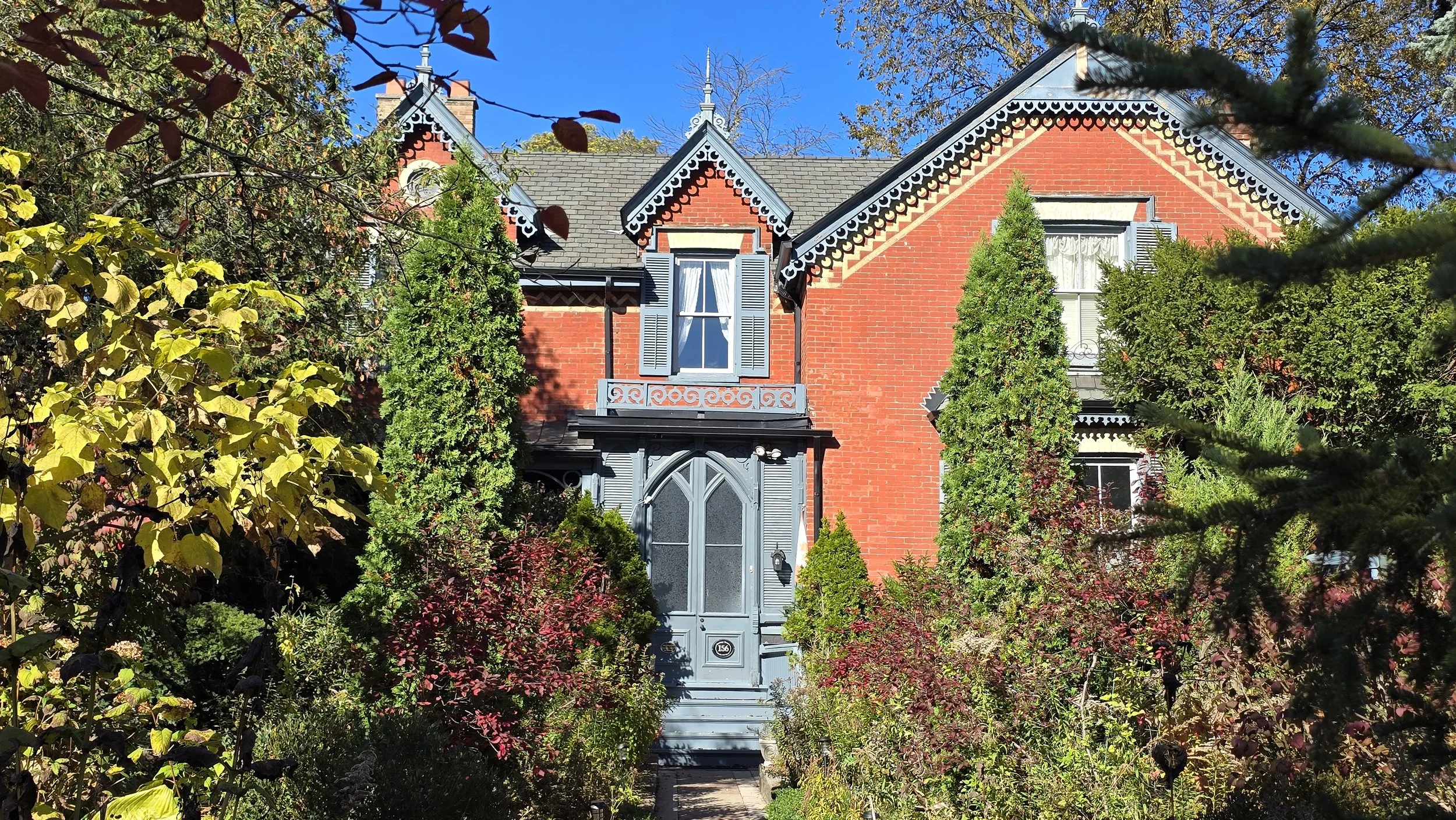
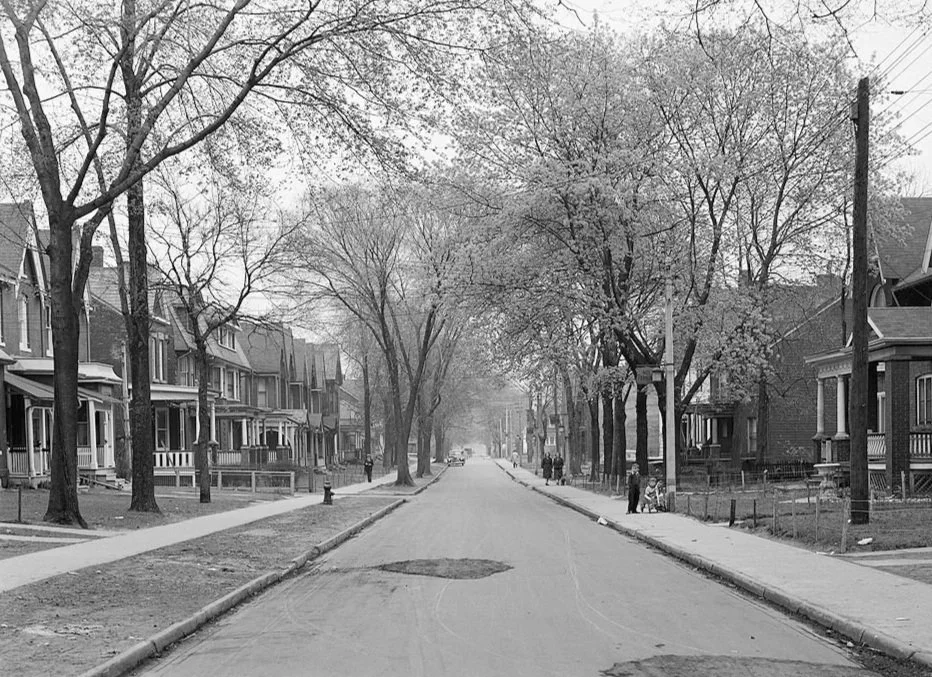
Walking through Cabbagetown feels like stepping back in time. Rows of well-kept Victorian houses, narrow lanes, and eclectic styles give the neighbourhood the charm of a 19th century village. On streets like Metcalfe, the view is almost unchanged from a century and a half ago.
But Cabbagetown is no museum. Behind restored facades are striking modern interiors and creative additions. Converted workshops and laneway houses showcase industrial innovation, and roof decks and hidden gardens bring contemporary urban flair to historic homes.
A Living 19th Century Streetscape
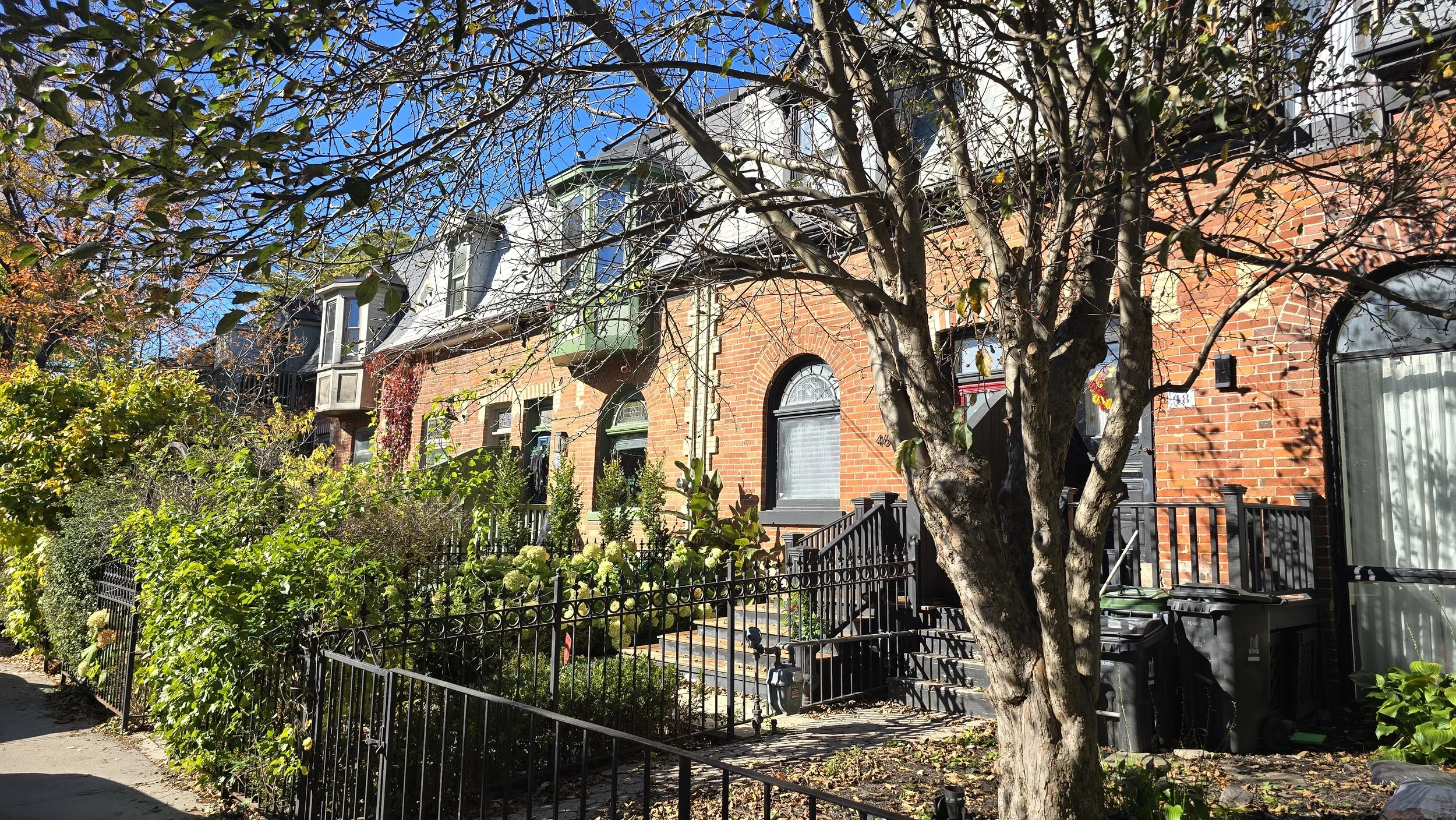
The character of Cabbagetown is expressed through what you see from the sidewalk — facades, gardens, fences, and streetscapes. With one of the densest collections of original Victorian homes in North America, it offers a rare glimpse into Toronto’s past. Homeowners help preserve this legacy by making changes that respect the original style of their houses.
Cabbagetown is a vibrant “village within the city.” A mix of grand homes, cottages, alleys, and converted workshops. The neighbourhood is a culturally active, mixed-income community.
Once an insult, the name Cabbagetown is now a point of pride.
A Brief History of Cabbagetown
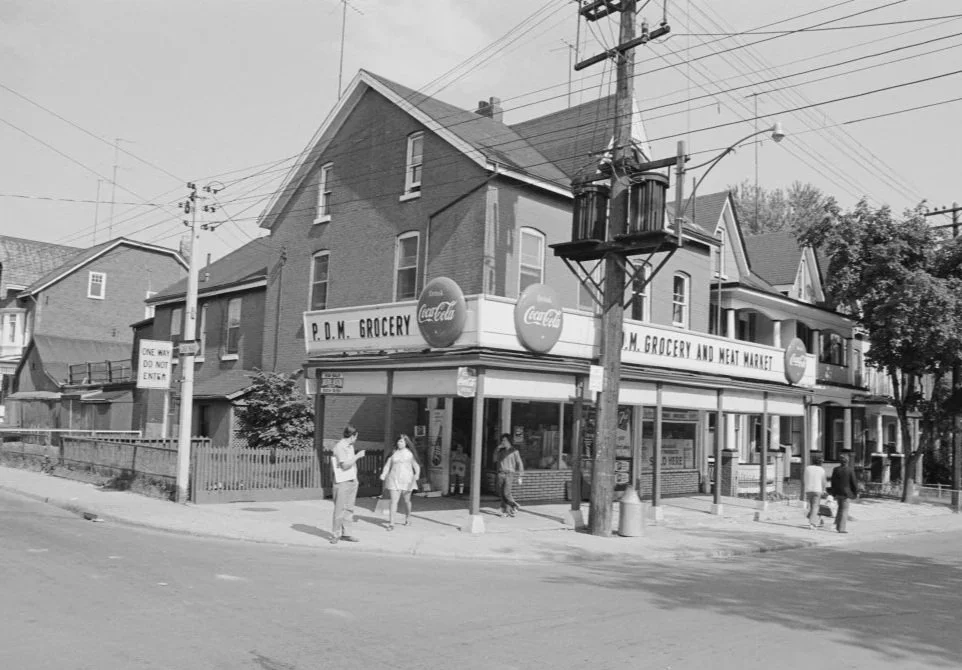
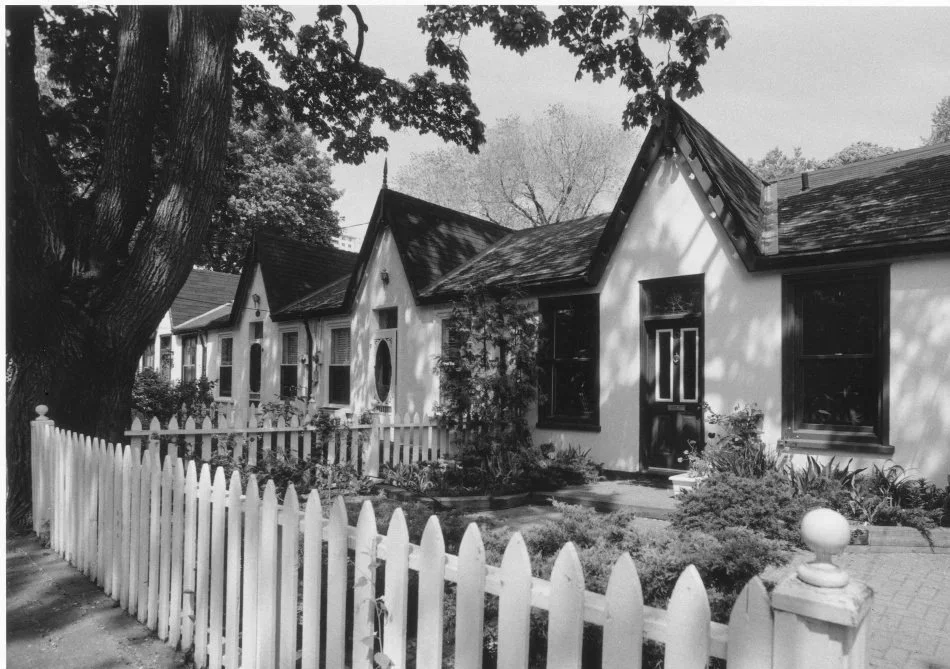
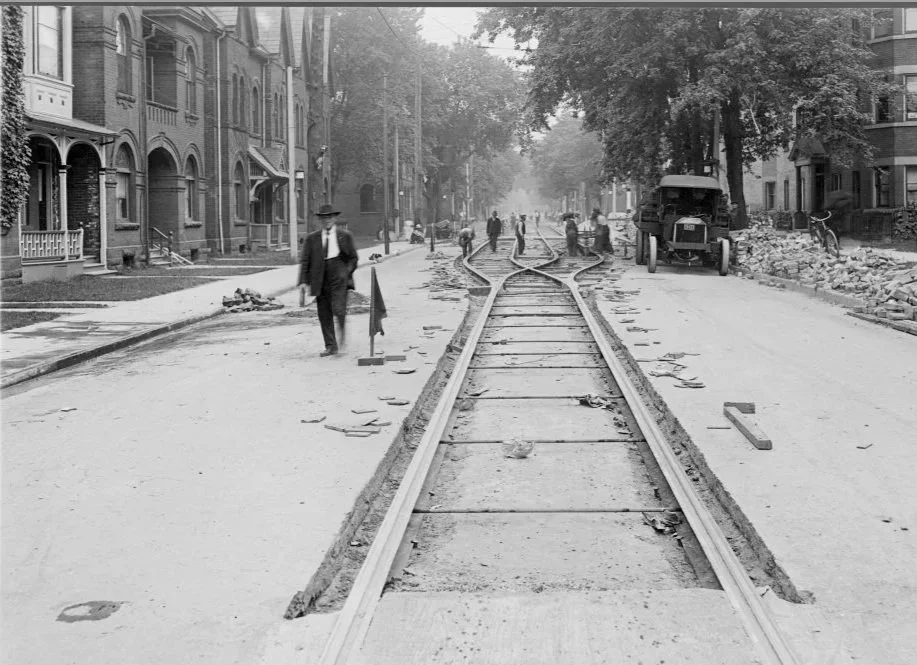
Cabbagetown’s name comes from the 1840s, when newly arrived Irish immigrants grew vegetables — mostly cabbages — in their front gardens. Wealthier residents in other parts of Toronto found this practice unrefined and called the area Cabbagetown.
Over time, the neighbourhood’s story unfolded:
Late 1800s: Workers’ enclaves and some middle-class homes.
Early 1900s: The area fell into decline well before the Depression.
1970s–1980s: A new Cabbagetown is born after residents organize to save it from the threat of demolition.
1990s-2000s: The renaissance of Cabbagetown continues.
2000s-2010s: The City of Toronto begins to designate areas of Cabbagetown as heritage conservation districts (HCDs).
2020s: The last residential area of Cabbagetown - Cabbagetown Southwest - is finally designated as an HCD.
Today: Cabbagetown’s main street - Parliament Street - still stands unprotected. More conservation work is needed!
Want to know more? The section below has a more detailed history of our neighbourhood.
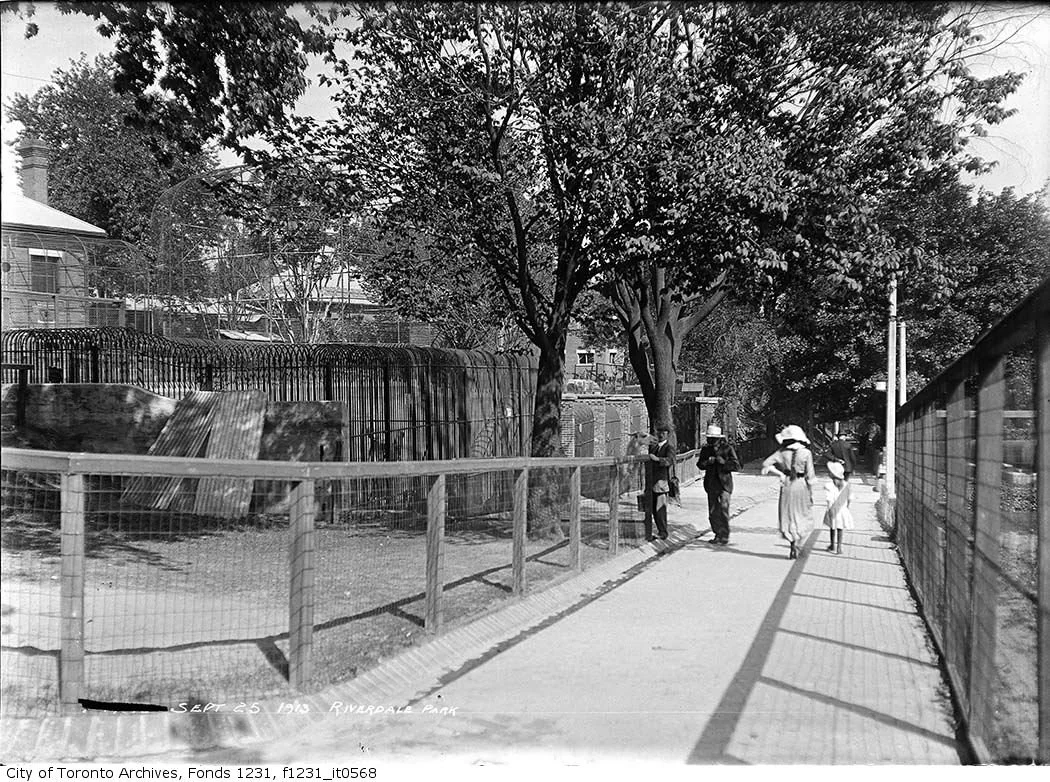
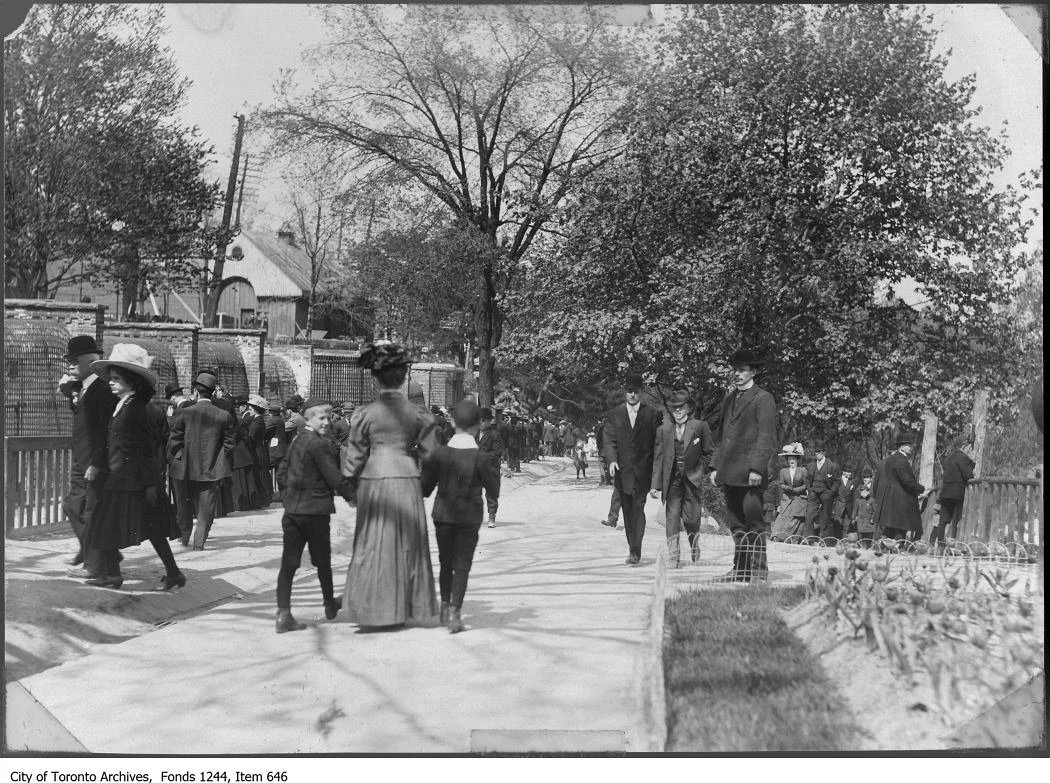
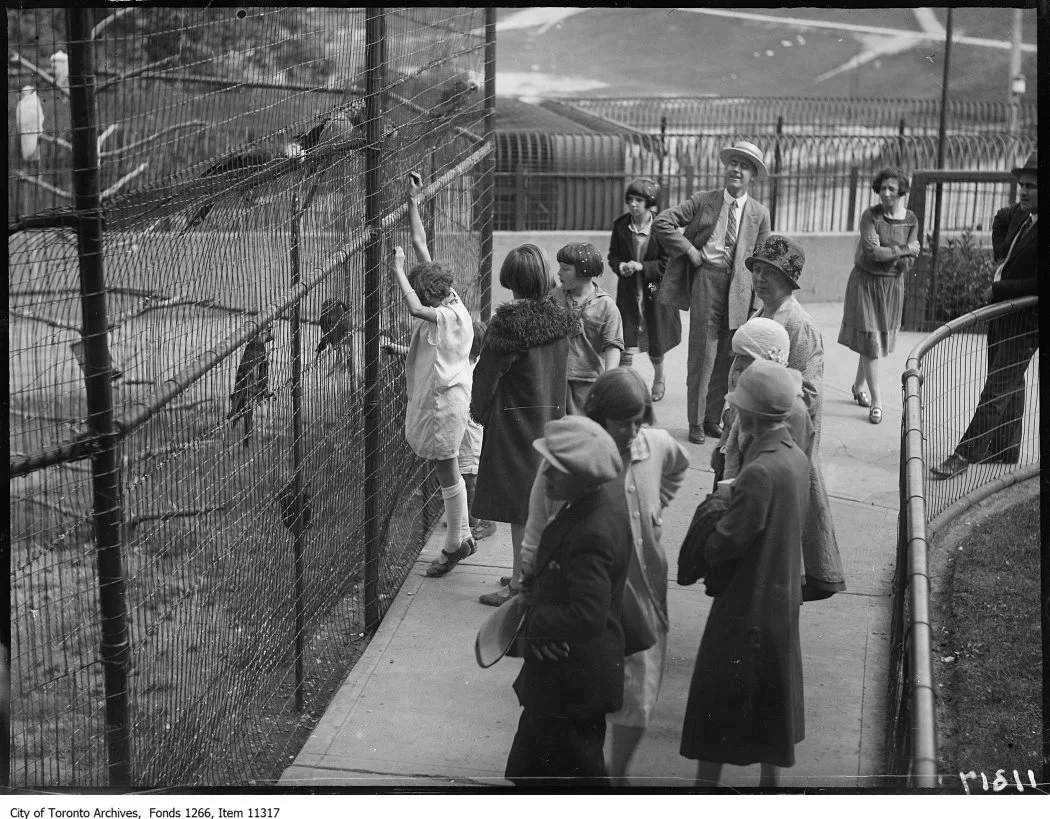
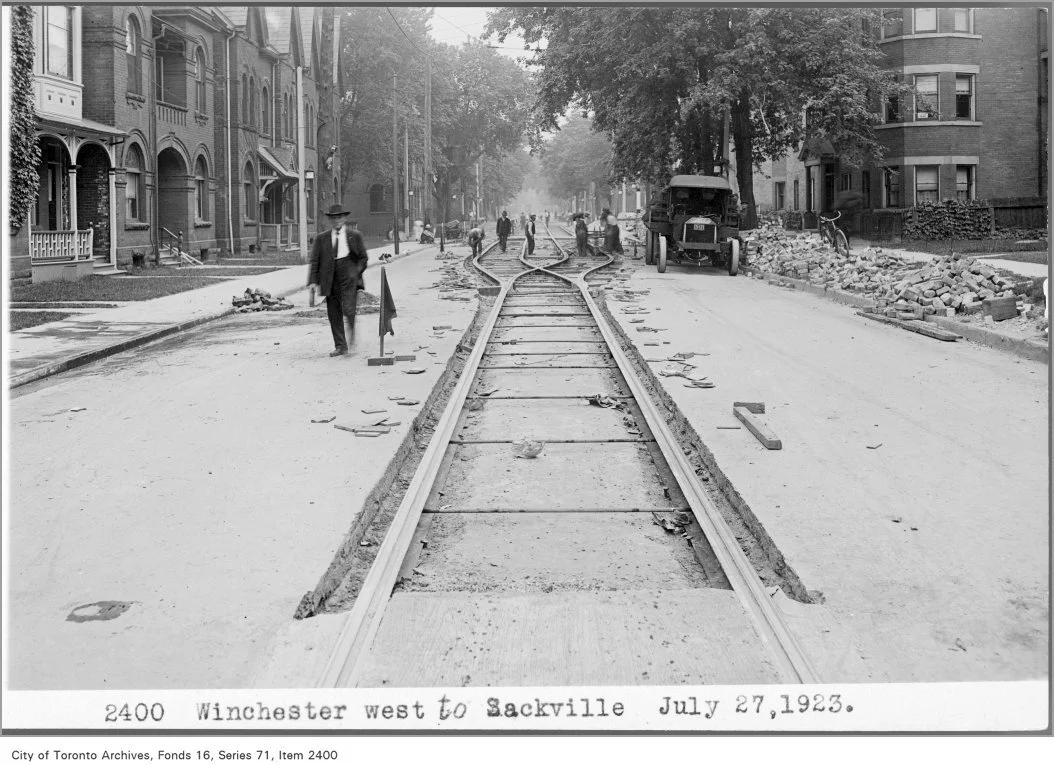
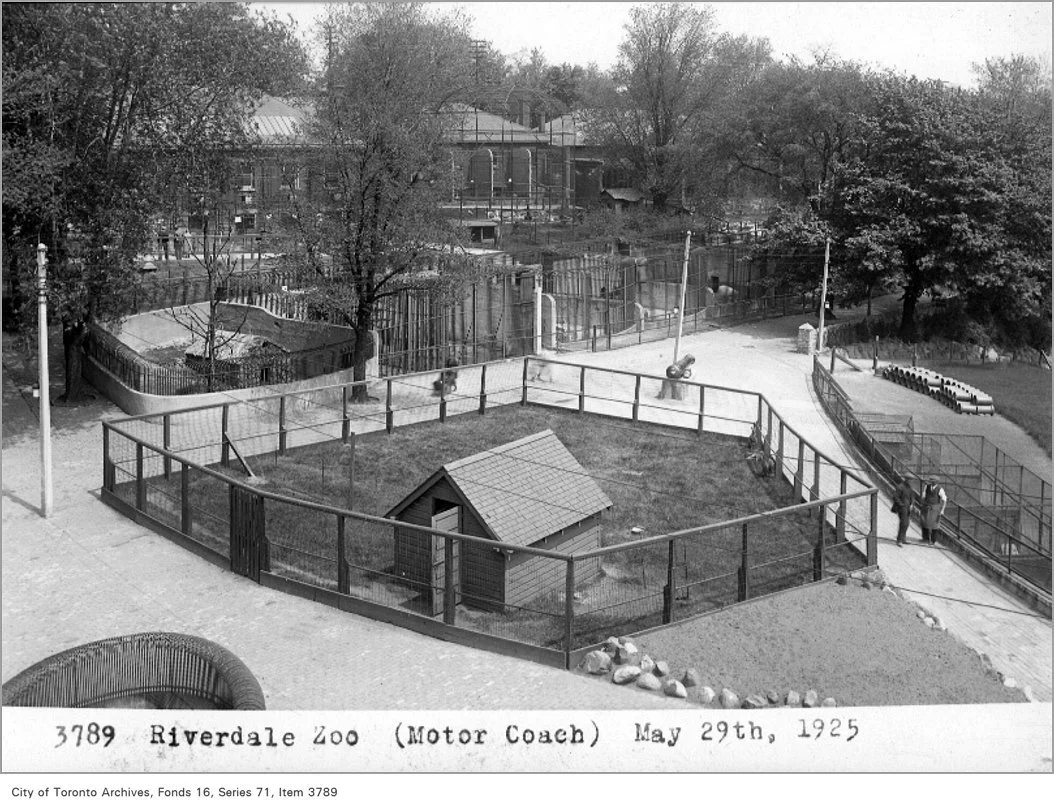
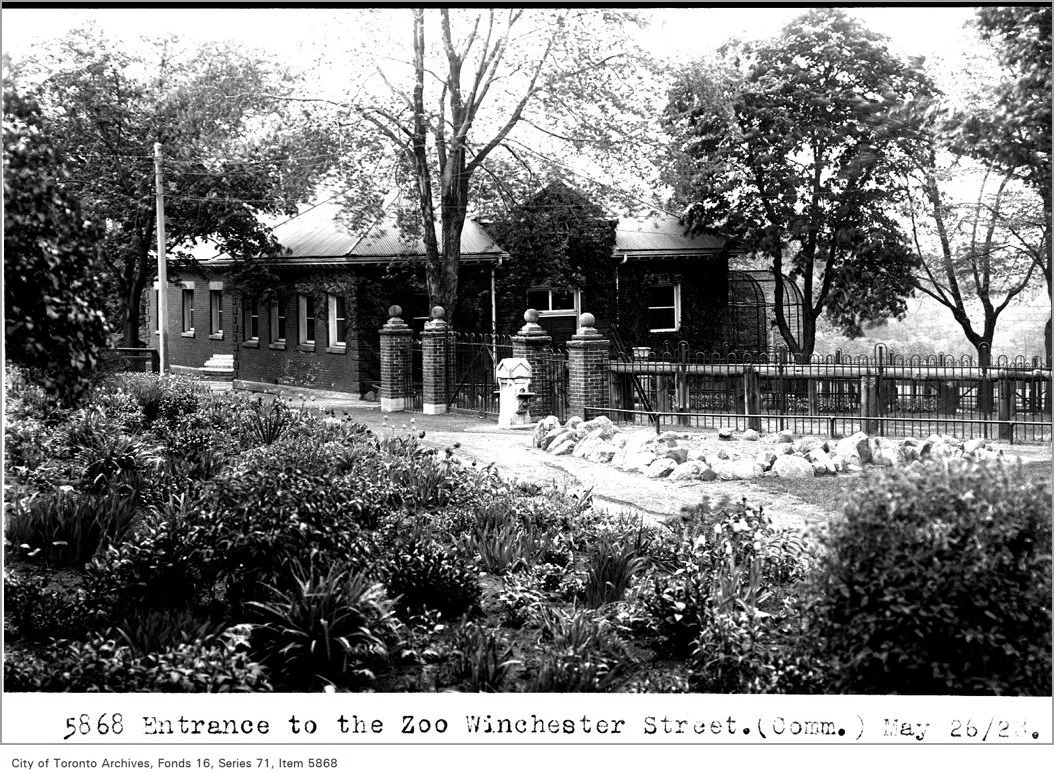
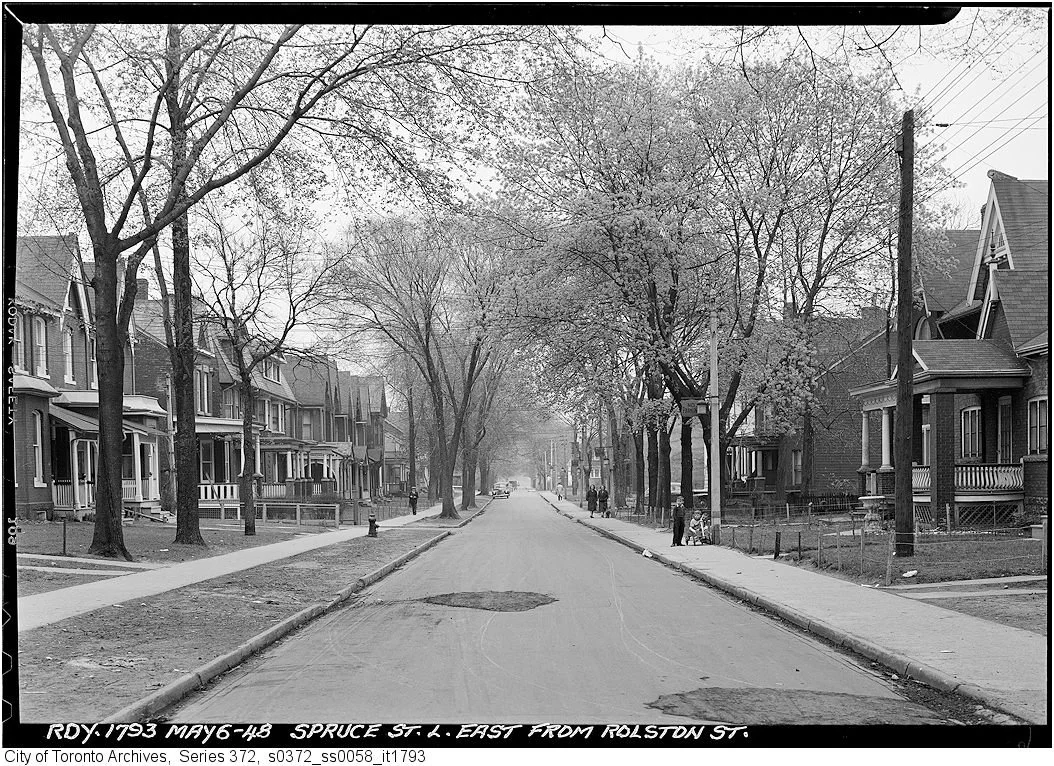
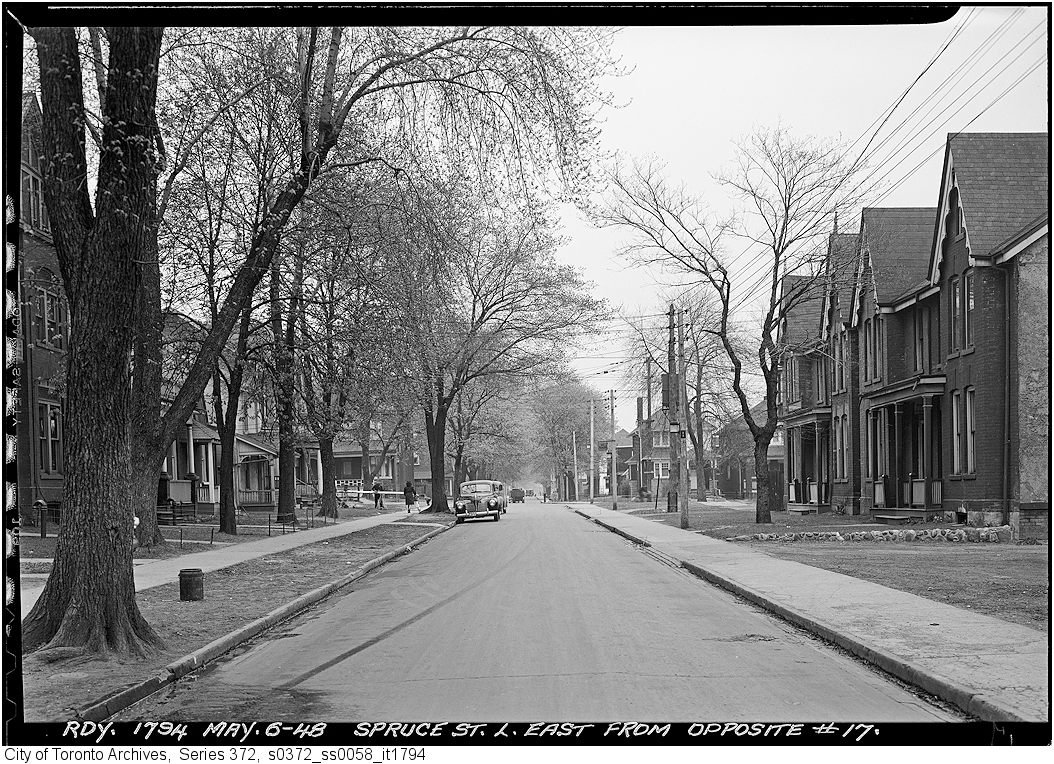
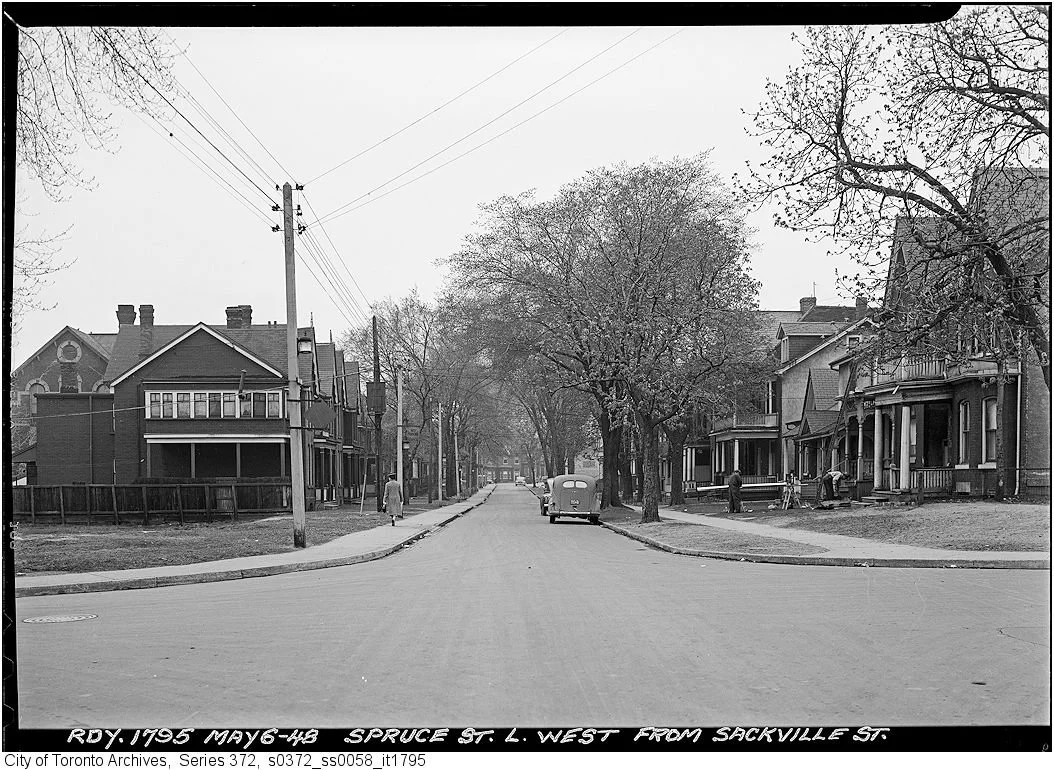

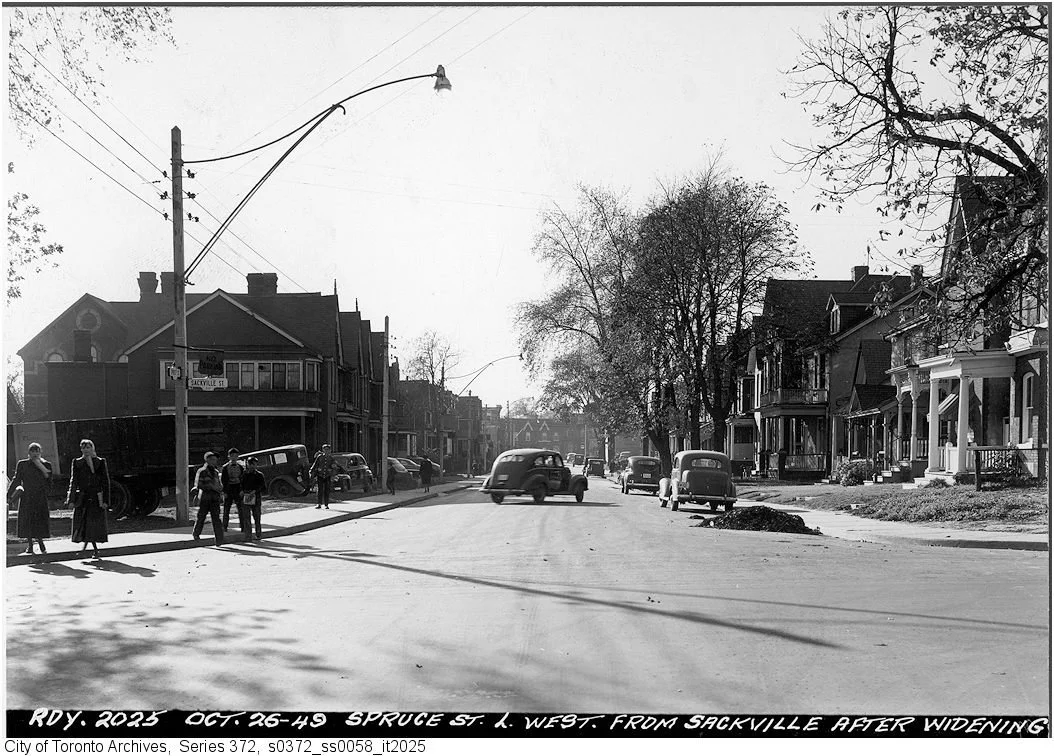
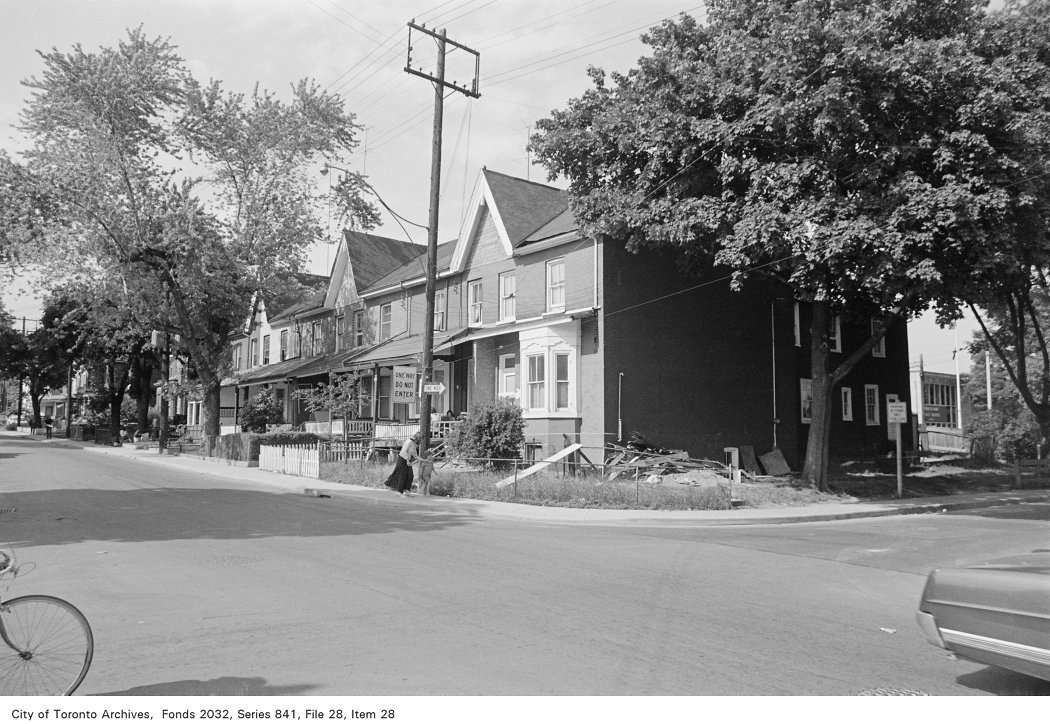
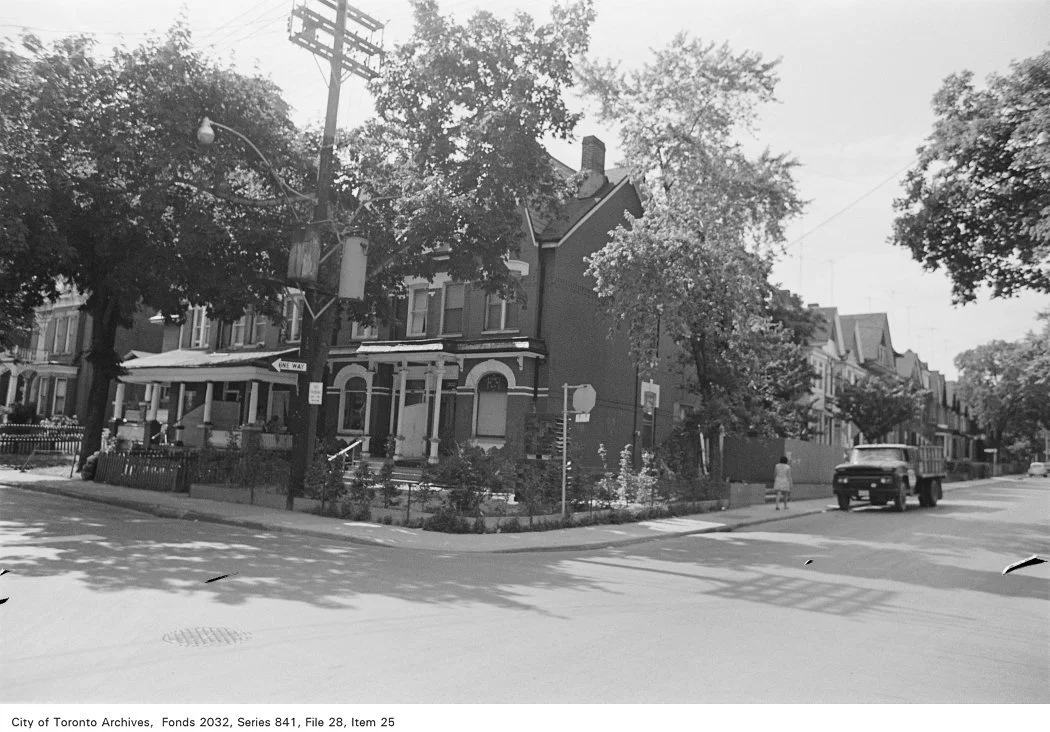

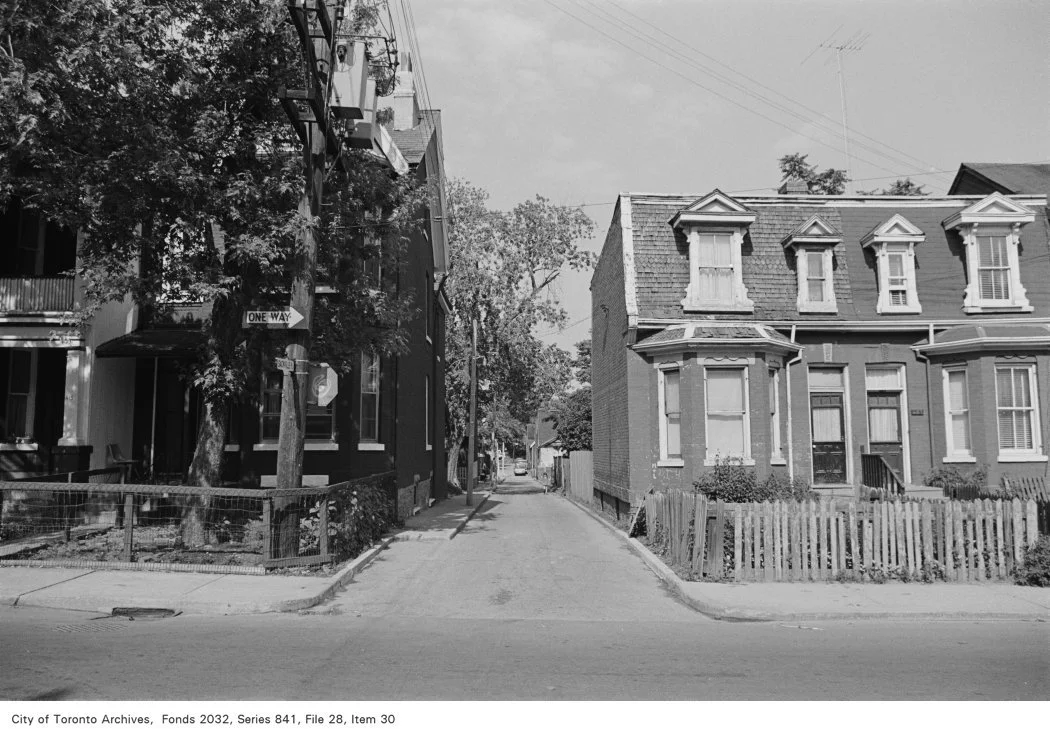
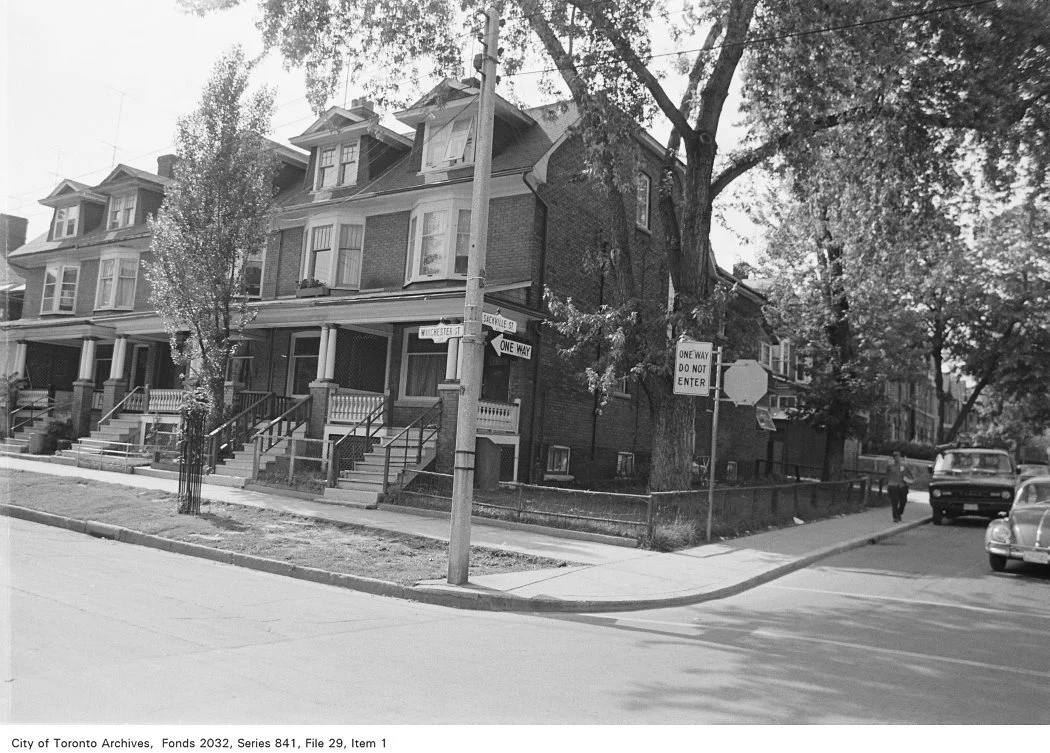
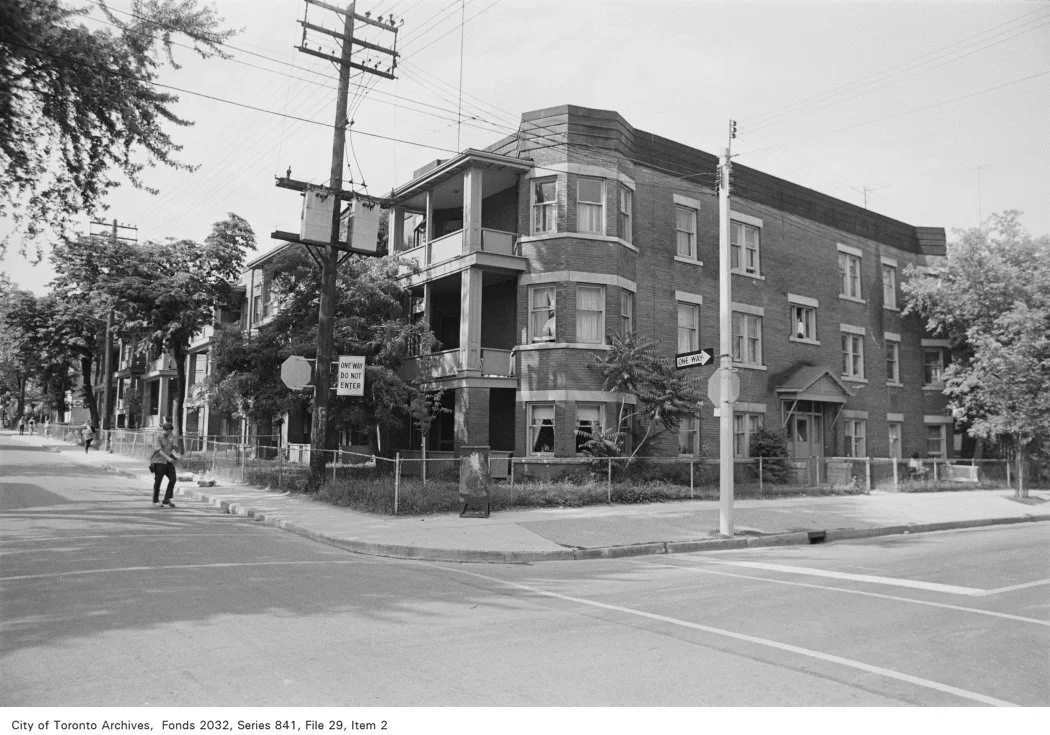
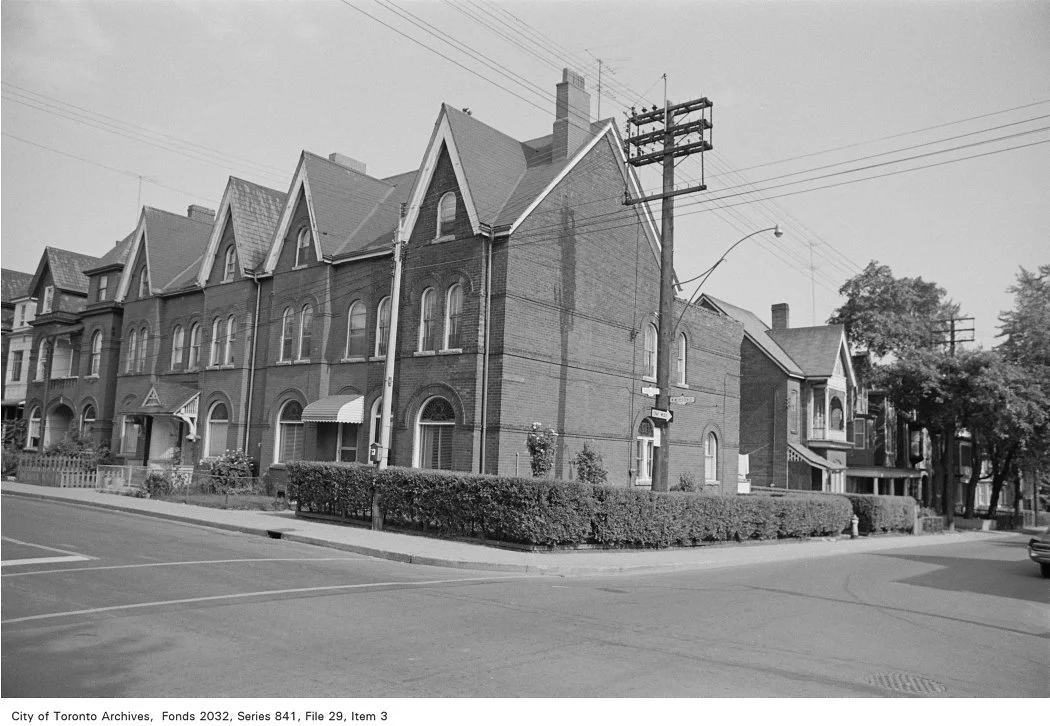
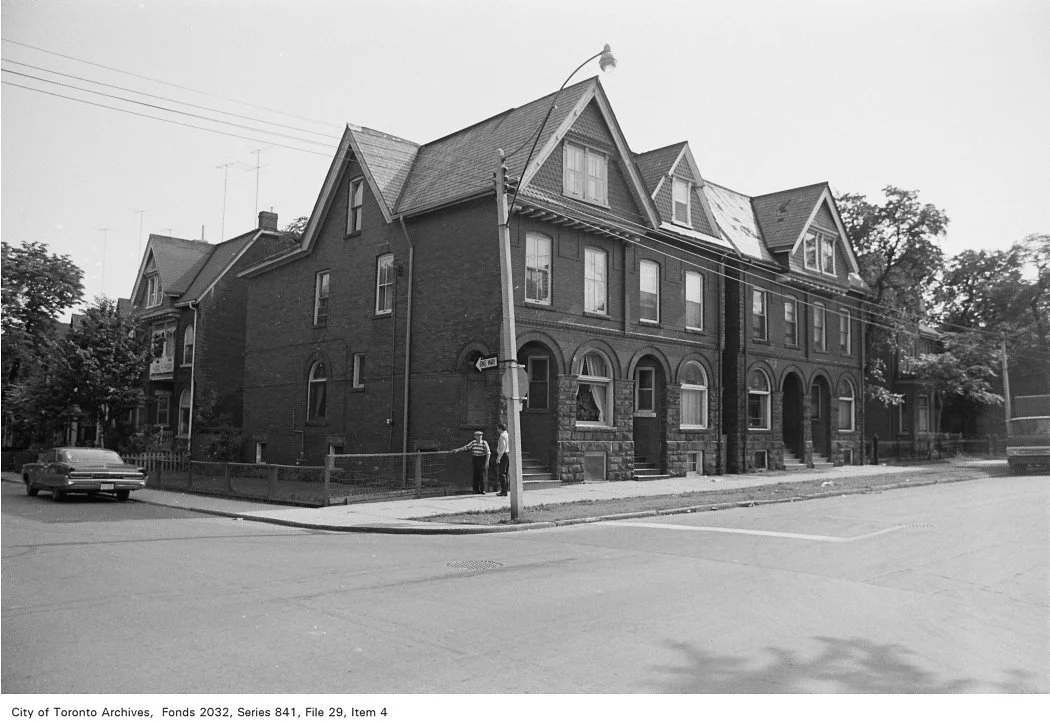

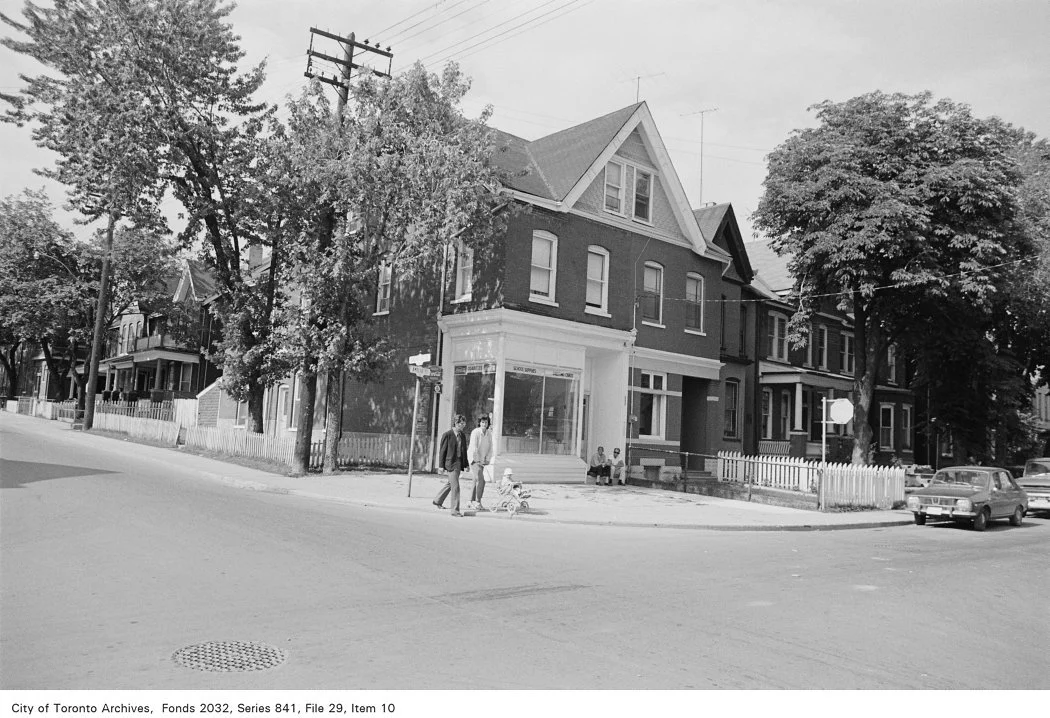
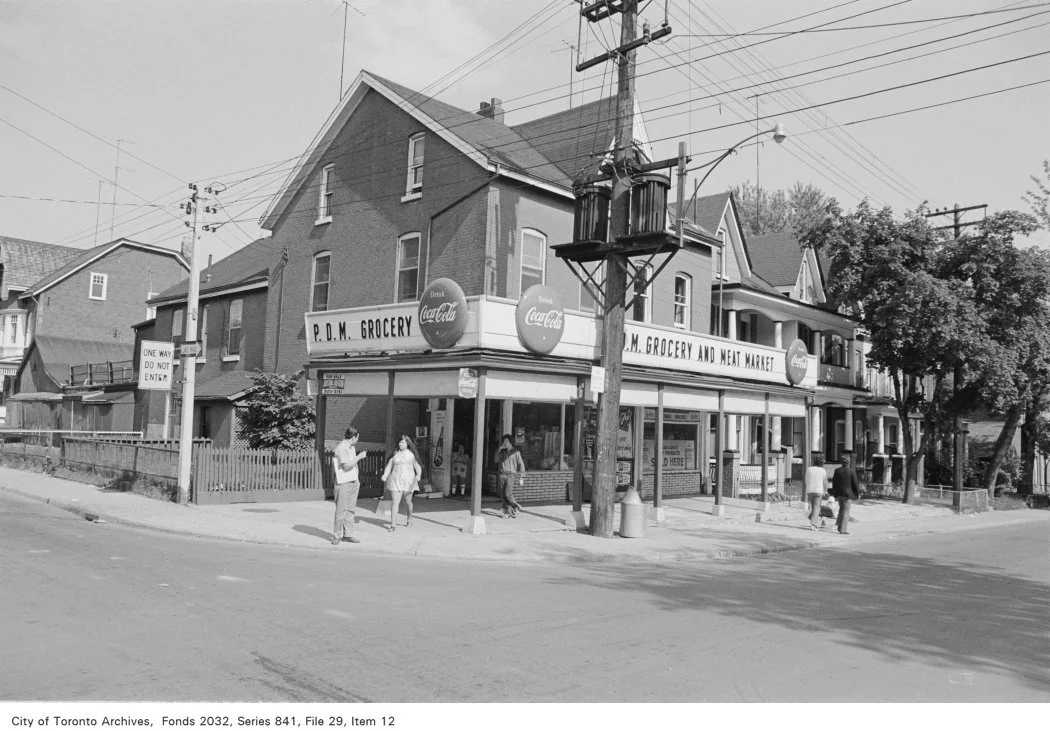
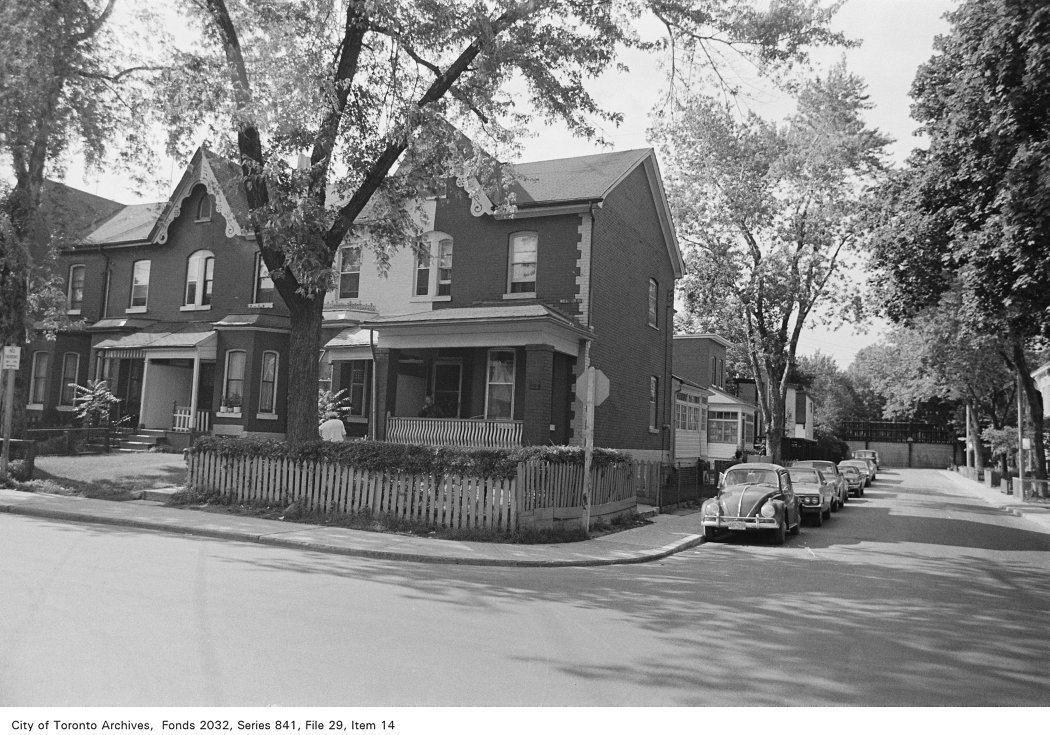
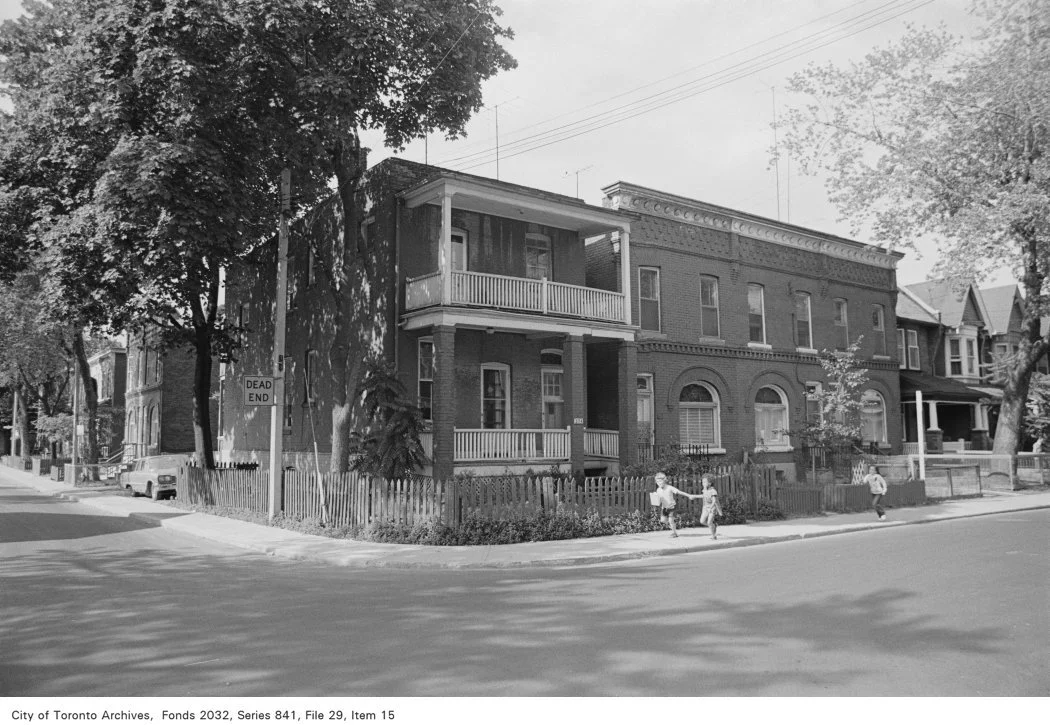
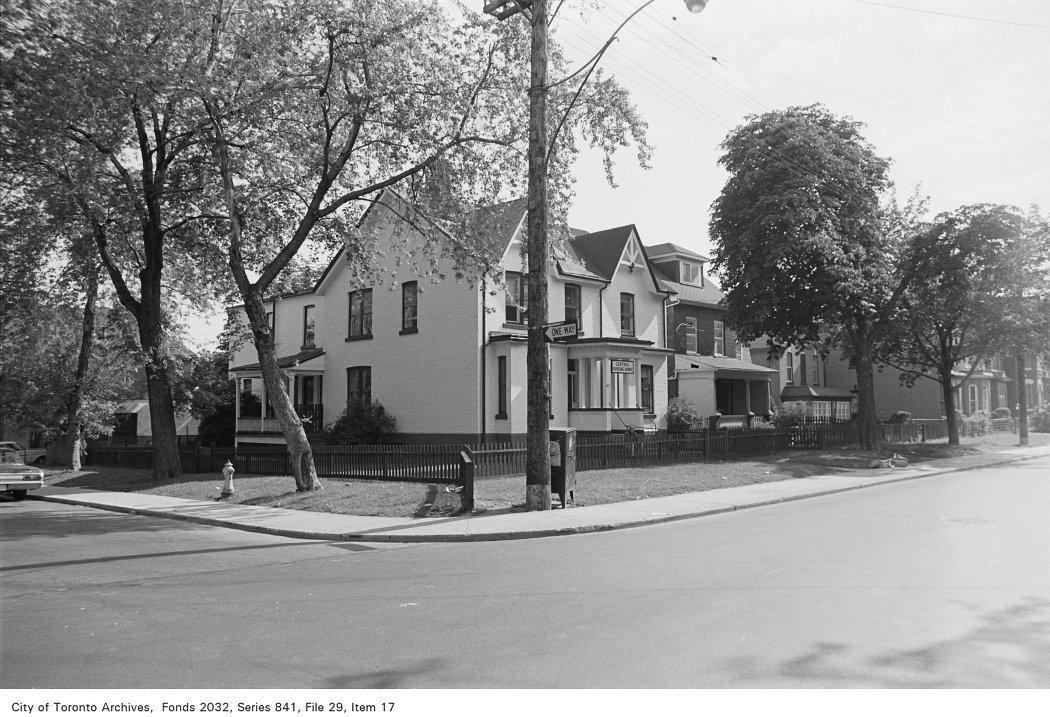
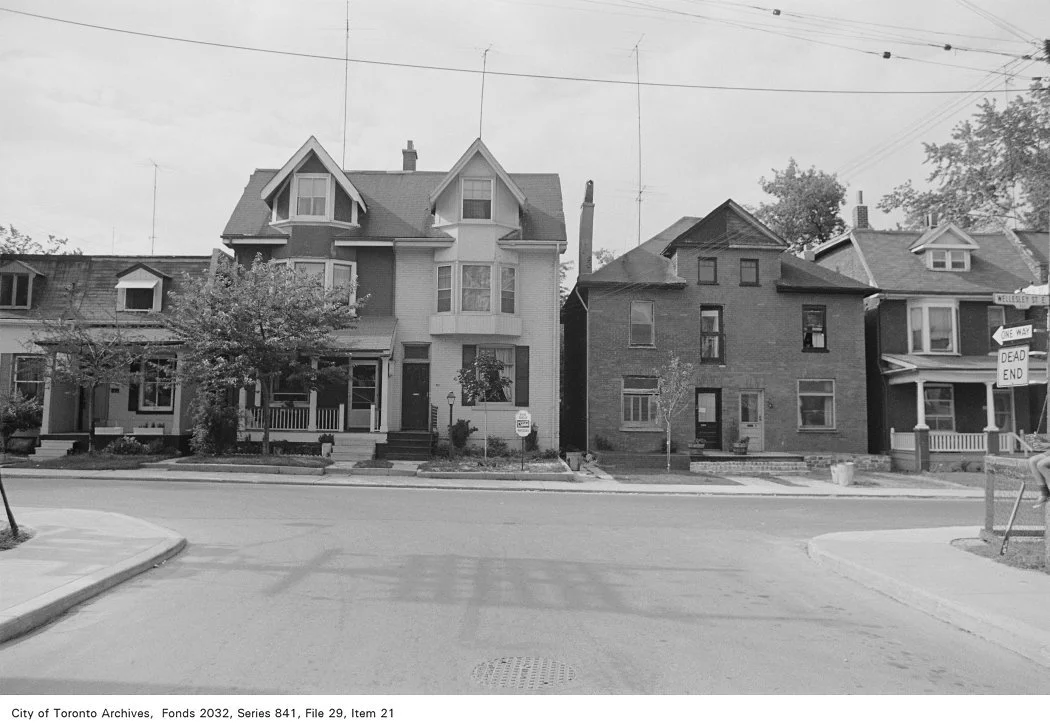
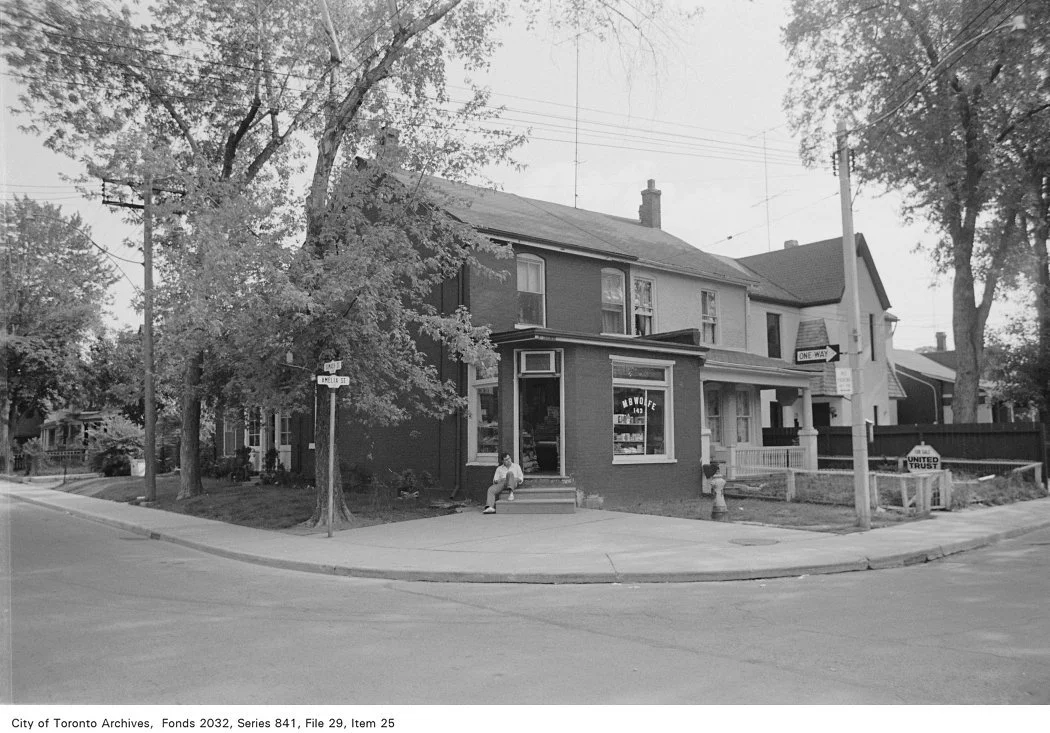
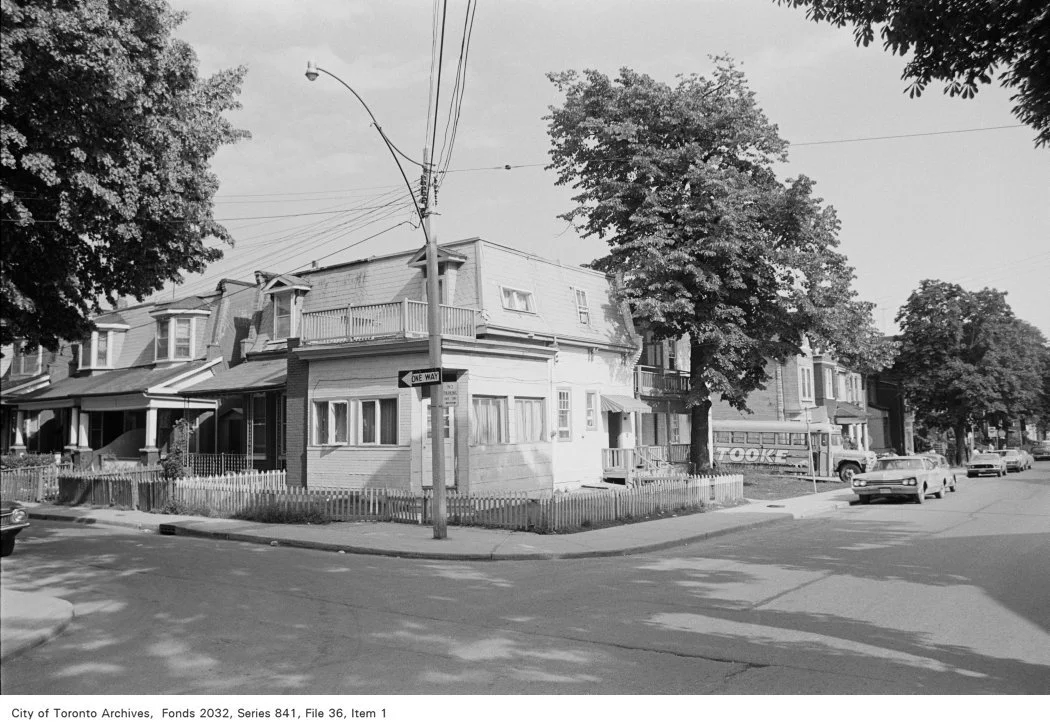
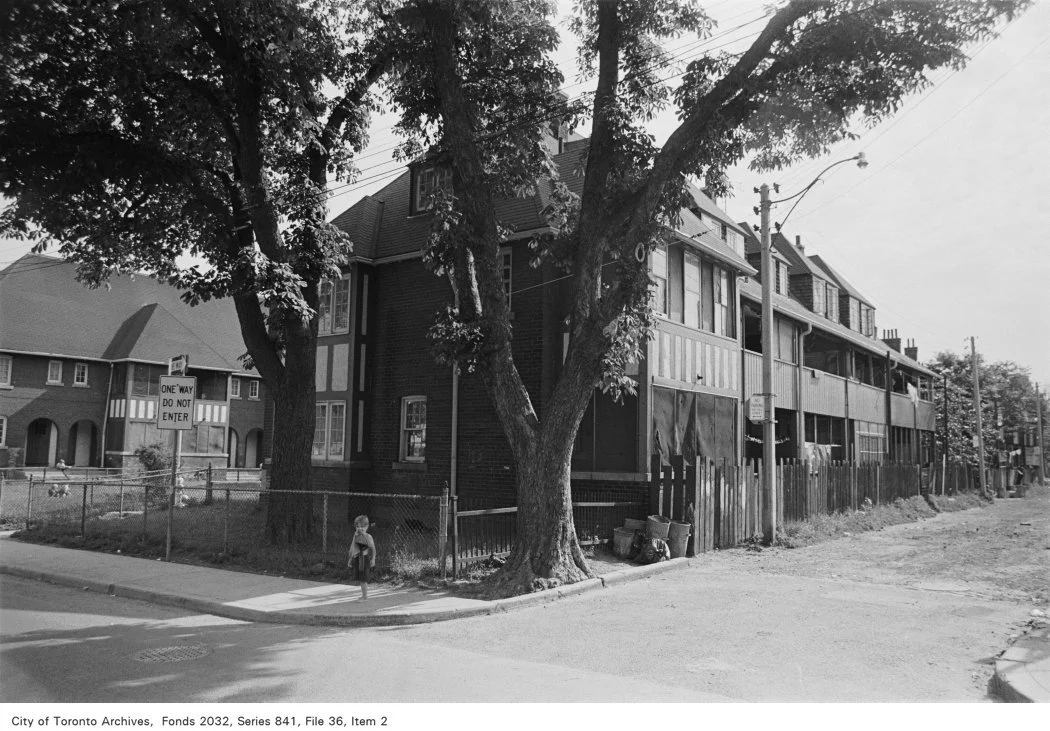
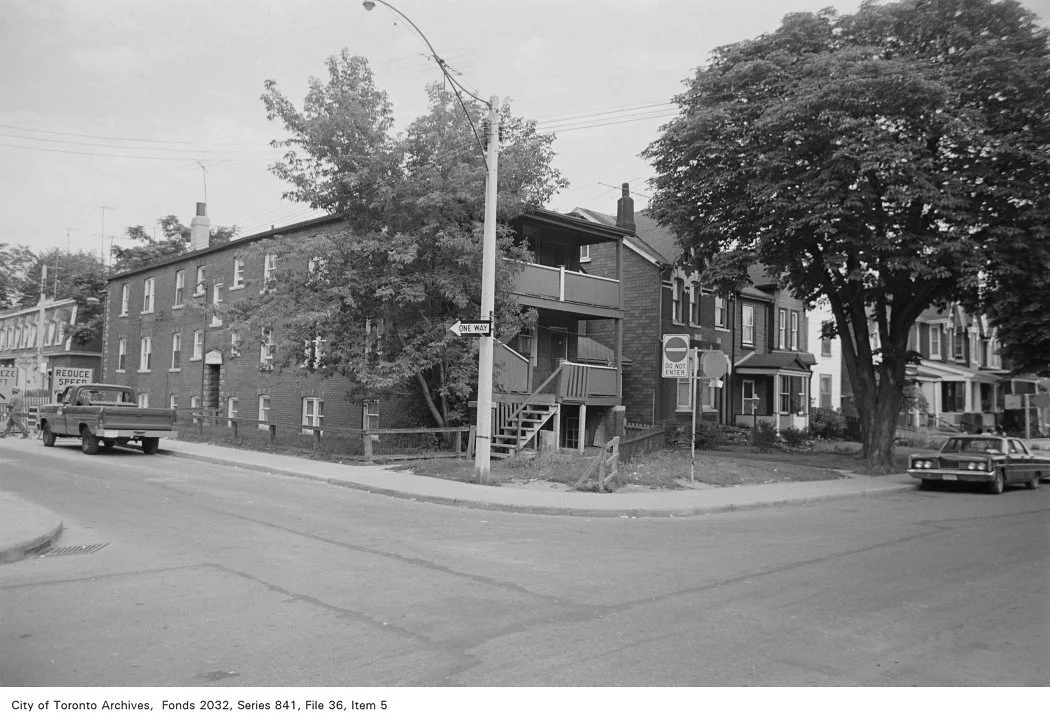
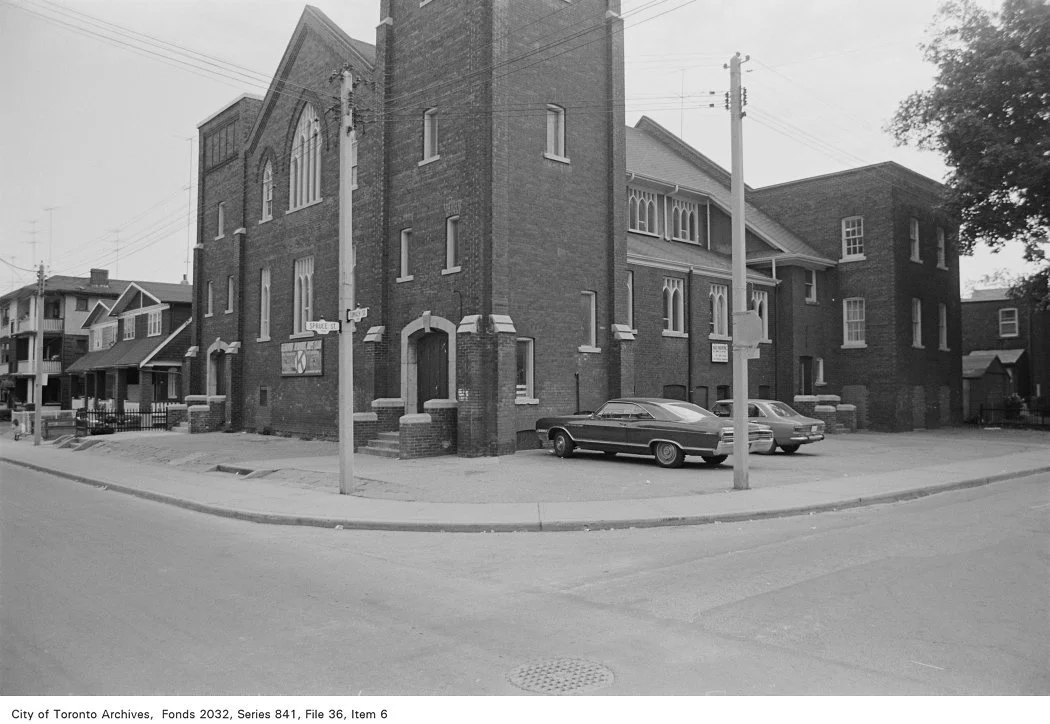
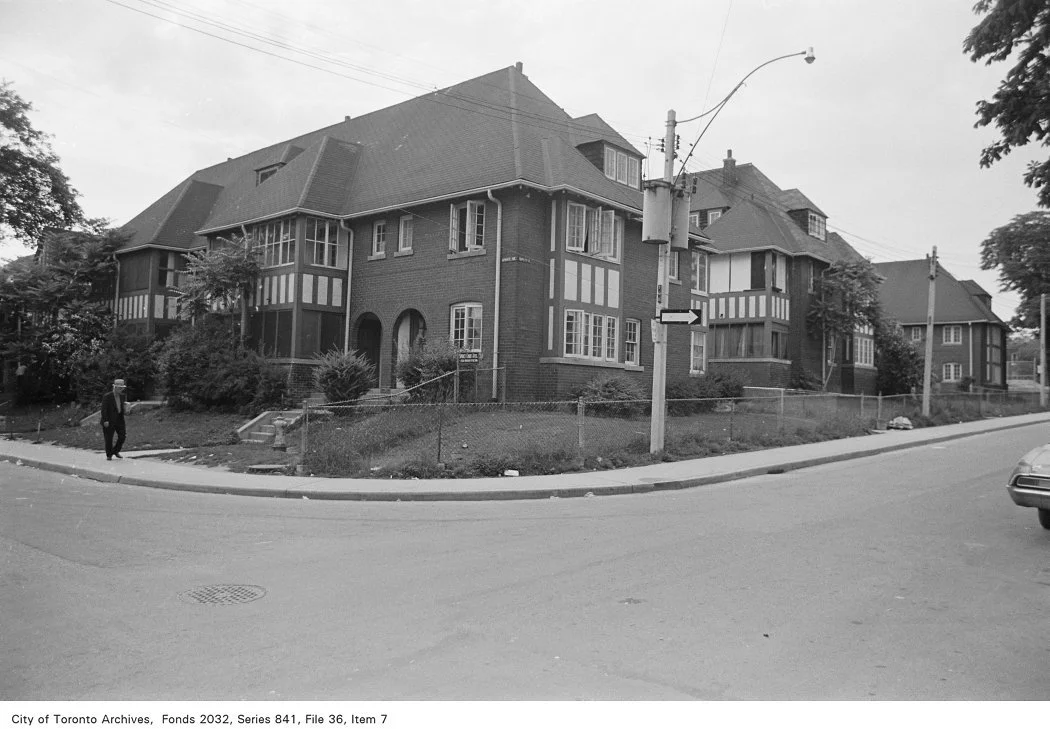
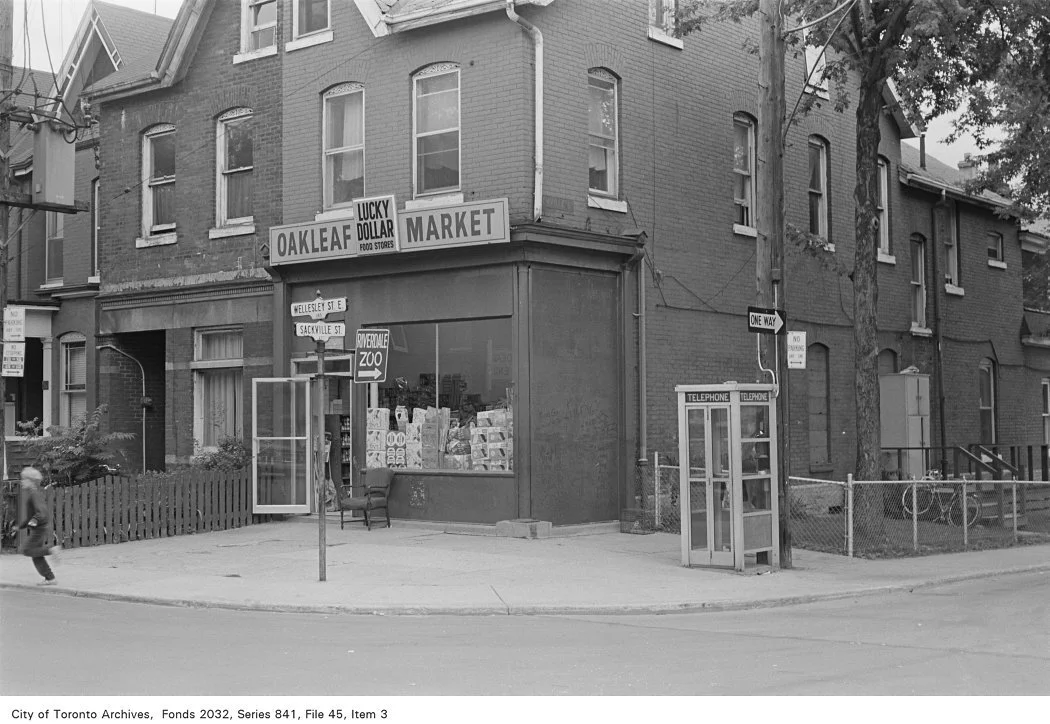
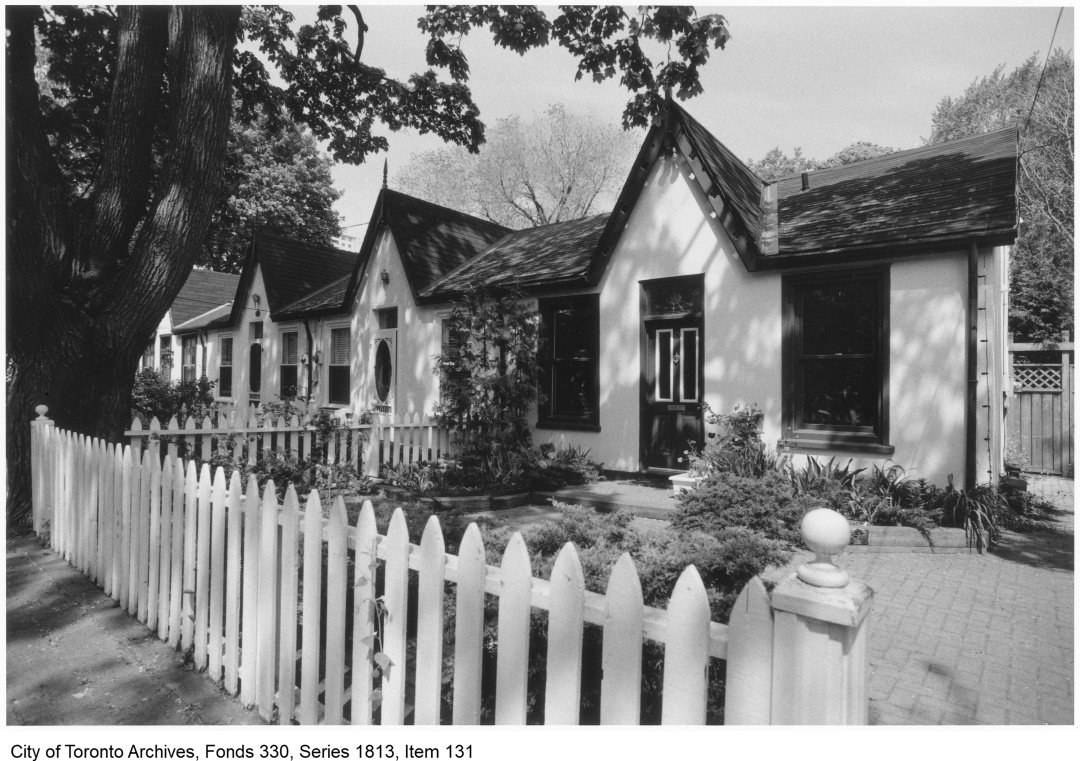
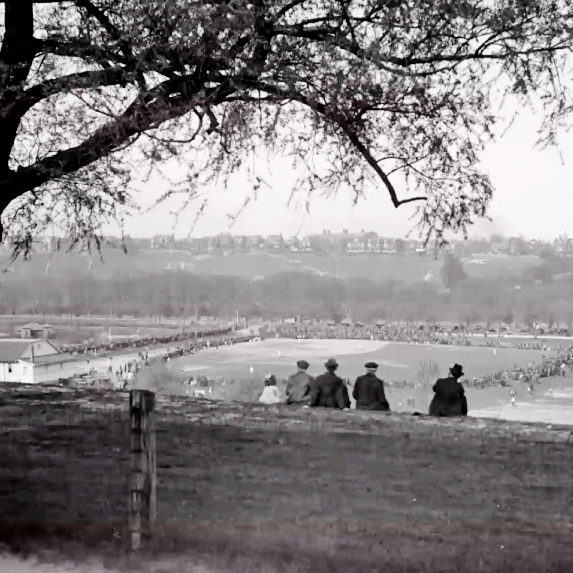
Images courtesy of City of Toronto Archives
Cabbagetown through the years
-
Cabbagetown sits on what has been the ancestral land of various indigenous peoples who would hunt, fish, trade, and harvest wild rice along the Don River just east and down the valley from today’s Cabbagetown. As well, migrating ducks used to frequent the area in the spring and the fall. As a result, there were remains of native camps and artifacts found in the area, including pottery fragments. The age and exact location of these sites are no longer known. With the channeling of the Don River in the 1880s, subsequent flooding over the past hundred years, and the construction of the Don Valley Parkway system in the 1950-60s, site locations would now be impossible to identify. [Source: First Story Toronto: Exploring the Indigenous History of Toronto]
When Lieutenant-Governor John Graves Simcoe laid out the Town of York in 1793, a series lots were given to the Upper Canada elite. The first lot west of the Don River and encompassing a large part of today’s Cabbagetown was assigned to Simcoe’s son Francis (aka Frank) who was 3-years old at the time. The Simcoe family built the first house in the area, a log cabin on a bluff overlooking the Don near what is now Bloor Street, and called this cabin Castle Frank in honour of their son. Simcoe also had a path cut through the woods from the first Upper Canada Parliament Buildings, near what is today Front and Parliament, all the way to the cabin. This path became Parliament Street.
-
Cabbagetown was first established in the 1840s, just outside of the newly created city of Toronto, as a northeast “suburb.” Parliament was the main north south road and Winchester Street the primary east west route in the area. For a time, Winchester Street continued east down the Don River valley, crossing over what was called Playter’s Bridge (later known as the Winchester Street Bridge) and becoming Winchester Drive east of the river. This connected with Danforth Avenue, and provided a link between the developing areas east of the Don (now Riverdale) and the growing city of Toronto. The bridge was rebuilt several times as the raging Don River, swollen by spring thaws, often swept it away. It was eventually demolished when the Prince of Wales Viaduct opened in the late 1910s, making it redundant.
It was also around this time that Cabbagetown developed as a residential area. When the Irish Potato Famine brought a huge influx of Irish immigrants to Toronto in the 1840s and 1850s, the city’s population began to spread eastward to the Don River and north. Most of the houses built south of Gerrard Street were small cottages, home to the workers in the many industries that were established along the river: Gooderham & Worts Distillery, William Davies Company (pork processing and packing), Sheet Metal Products, several breweries, etc. In Cabbagetown, the Lamb’s Glue and Blacking Manufactory stood in what is now Wellesley Park. As well the Toronto General Hospital opened in the area, also providing a source of employment.
Land in Cabbagetown was also set aside for public space. Two cemeteries were opened in the area: the St. James Cemetery in 1844, and the Toronto Necropolis in 1850. These are the final resting places for several important figures in Canadian history, including George Brown, Robert Baldwin and William Lyon Mackenzie.
Times were tough for many of these immigrants and to help provide food, residents would grow vegetables, including cabbages, in their front yards, resulting in the area’s nickname of Cabbagetown. Cabbages were very popular as they grew in the area’s soil, kept well, and were versatile in the kitchen. The area south of Gerrard is actually the original Cabbagetown.
-
North of Gerrard Street, the area was more mixed, with houses belonging to both blue and white collar workers and even some wealthy company owners in the large houses along Carlton Street. Many of the homes were built in what is now considered the quintessential Cabbagetown style. Tall, thin, asymmetrical and often semi-detached, these Gothic Revival style houses featured protruding bay windows and a pointed front gable, often decorated with gingerbread. The name of this style is more a description: Bay& Gable.
Starting in 1899, part of Riverdale Park West became the home of Toronto’s first zoo - called the Riverdale Zoo - with lions, bears and monkeys. The zoo closed in 1974 and moved to Scarborough. A heritage farm - the Riverdale Farm - opened in 1978, and is today home to cows, horses, pigs and the ever popular heritage chickens.
Cabbagetown’s prosperity peaked in the late 19th century (the majority of Cabbagetown’s stock of homes was built in the 1880s and 1890s) and early 20th century. The First World War had a devastating impact on the area and its population, and the area slid into decline even before the Great Depression drastically changed the face of Cabbagetown. As jobs became scarce, people fell on hard times. Many were forced to move away and families were split up. Many of the homes were subdivided into often sketchy rooming houses. The area appeared to have been forgotten by city planners. It was this period that prompted author Hugh Garner to call Cabbagetown “the largest Anglo-Saxon slum In North America”.
-
The first threat came in the 1950s, but local opposition prevented several grand Victorian Carlton Street mansions from being sacrificed to a Don Valley Parkway exit. Developers also lurked.
In the 1960s, the plans were to expand St. James Town-style highrise towers all over Cabbagetown. Residents got organized and fought, with support from a new philosophy at City Hall. Indeed, a reform Council under Mayor David Crombie was elected and imposed a height by-law, the developers began to sell off these properties.
This large stock of decayed, but largely untouched, Victorian housing was discovered by some clever realtors and renovators who, attracted by low prices and the area’s history, began to restore these historic houses to live in them or flip them. Thus began a process of renaissance that today makes Cabbagetown one of the most beautiful and sought-after residential areas of Toronto.
In 1987, to prevent any future threat of destruction, a group of concerned citizens created the Cabbagetown Preservation Association (CPA) to fight to preserve the area’s architectural integrity and historic character, ending up with the beautiful community we see today.In the late 1990s, the CPA and the City of Toronto started working on designating our community as a heritage conservation district (HCD). Considering the size of the area, it was decided to split Cabbagetown into various sections to make the task more manageable. In 2002, the City of Toronto designated the first area - Cabbagetown-Metcalfe - as an HCD. Over the following years, the designation of more sections followed.
In 2024, the last section - Cabbagetown Southwest - was designated. Now, all of the residential areas of Cabbagetown have been designated as an HCD with the benefits and responsibilities that it carries.
-
We may be tempted to think that “the job is done!” However, this would not be completely true. Indeed, the heart of Cabbagetown - its main street - is not protected and has now started to attract developers. Community representatives led by the CPA are advocating for action to bring protection to heritage buildings on Parliament Street as well as improve its streetscape and manage its densification. History almost repeats itself as the CPA goes back to the role that created it: trying to save the heritage of Parliament Street and help steer its future.
Understanding Architectural Styles
Many of us casually describe our homes as “Victorian.” But Victorian is a period, not a single style. Just like us, Victorians loved to play “architectural dress-up,” borrowing designs from earlier eras. Later decades added new styles with their own features.
Explore the architectural styles of Cabbagetown through illustrations created by CPA Board member and designer Steve Yeates, and discover where your home fits into this story.
Arts & Crafts
-
Inspired by the “honesty” of Medieval building, and theorized by Ruskin and William Morris in the late nineteenth century, the Arts and Crafts Movement advocated traditional materials and building practices, good craftsmanship and simple ornamentation. In Toronto, the leading Arts and Crafts exponent was the architect Eden Smith. His design for what is now the Spruce Court Cooperative housing (1913) at Spruce Street and Sumach Street is an outstanding Canadian example of Garden City planning, derived from Arts and Crafts principles. Because the Movement claimed to be “styleless”, like Queen Anne, its architecture cannot be readily classified by specific motifs. Some Cabbagetown examples have been partly influenced by regional variations. Many Cabbagetown houses built in the 1920s have distinctly Southern Ontario characteristics. Most prevalent in Cabbagetown is the largely unornamented “Tuscan” variation in which gabled semi-detached and detached houses are fronted by porches supported on Tuscan columns or half columns. A similar type occurs in several nongabled versions, in which a bay is applied above the porch, often aligned with a roof dormer. Several of theses houses occupy the old Toronto General Hospital.
-
steep roof pitch, may be gabled or hipped
wood or slate shingles on wall as well as roof
brick or stucco
simple geometric forms
open eves with exposed rafter ends
recessed entrance or entrance to side
asymmetrical facade
Gothic Revival
-
While the Bay-n-Gable style, in its strong verticality, might be regarded as Gothic in inspiration, particularly when accompanied by pointed arch openings, as on Amelia Street, Cabbagetown has several fine examples from the same period of pure Gothic Revival houses. The style was inspired by the late Romantic Movement, in which a picturesque composition is characterized by high ornamentation.
Note:
The gables are usually highly ornamented (often with trefoil or quatrefoil carvings).
There is whimsical detailing. The top window arches are pointed.
-
usually mixed in with other styles pinnacle on centre arch
steeply pitched roof, front gable(s)
decorative bargeboard
trefoil pattern in decoration
windows arched
may be stone, board and batten, brick
occasionally bay on first level
Bay & Gable
-
Probably the most prevalent Cabbagetown style, most were built in the later 1880s during a strong economic and population boom. Practically every Cabbagetown street has its share of elegant Bay & Gables.
Note:
Strong vertical emphasis in which the lines of the bay, together with the narrow openings, draw the eye to the crowning gable and its vigorous display of carved gable board and supporting brackets.
Unique to Southern Ontario is its combination of varied gable ornamentation, red and yellow brick and two or four light sash windows.
Half-glazed panelled and transomed entrance doors.
Variations: half Bay & Gable where the bay fronts only the ground floor often capped by an open fretwork dwarf parapet, and/or by a quasi-mansard roof in tin or copper.
-
tall chimney
pinnacle
decorative bargeboard varying in complexity
yellow brick embellishment
full or half height bay
facade is asymmetrical often semi-detached
windows 4/4 or 2/2
door is half glazed
Queen Anne
-
This most elaborate and eccentric of all Victorian styles is also the most difficult to define and has many variations. In the 1880s and 1890s it was popular throughout North America for large, expensive residences as varied as the “painted ladies” of San Francisco and the brownstones of Brooklyn. In Toronto, the style is common in The Annex and Rosedale.
Note:
There are a lot of elaborate details, including terracotta ornamentation and patterned masonry.
High pitched roof turrets are often found.
-
original roof wood or slate
asymmetrical façade
dominant front-facing gable,
often cantilevers out past the wall belowoverhanging eaves
bay window
porch covering part or all of the front facade
may also have a second-story porch or balconies tower(s), differing wall textures, terra cotta tiles, relief panels, or wooden shingles over brickwork, dentils; classical columns; spindle work; oriel and bay windows; horizontal bands of leaded windows; monumental chimneys
Second Empire
-
Imported from France, developed in Louis-Napoleon’s Second Empire after 1851; used in Toronto until the 1880s. Here, it was applied by the wealthy and workers’ alike.
Note:
The Mansard roof: a dormer top floor whose facade walls slope steeply inwards and are clad in roof tiles (patterned and originally slate).
The eaves are often supported by ornamented brackets.
The window and door openings are frequently arched and emphasized by projecting lintels and pilasters.
The original windows often have a double casement; two and four light sash windows are also common.
-
cast iron rail
top cornice, sometimes with brackets
raised party wall, if in a row
roof originally of wood or slate shingles, sometimes patterned
mansard roof
dormer window
roof brackets
2/2 or 4/4 windows
half glazed door with transom
asymmetrical facade
Georgian
-
The earliest of Cabbagetown styles, these mostly brick-clad houses were built in our neighbourhood between 1840 and 1870. Elegant and austere, the Georgian house has a sparsely ornamented, symmetrical façade.
Note:
Sometimes windows are four-light sashes but more often 8-12 lights.
The entrance door is usually centrally located, half-glazed, panelled, with sidelights.
There often is a semi-circular sunburst transom above the door.
-
raised masonry parapet for row houses but may exist on detached dwellings.
roof slants to front and back, originally of wood or slate shingles.
entablature may have classical elements, including a cornice and freize.lintels of wood or stone, sometimes arched door with six panels, usually with a transom and sometimes side lights.
multi-paned windows ranging from 2/2 to 12/12
small stoop or porch
Romanesque Revival
-
Most prevalent between the late 1880s, and 1905, the style in its more robust variation, as in Toronto’s Queen’s Park and Old City Hall, was inspired by the work of the American architect Henry Hobson Richardson.
Note:
The brickwork is fine and narrow-jointed.
Terracotta egg-and-dart decorations are often found.
There is a rugged stone base, often derived from Credit Valley sandstone.
-
may be seen as a Queen Anne / Richardson Romanesque hybrid.
original roof of slate
attic gables
tower(s)
terra cotta accents
large rounded Romanesque arches, sometimes recessed
exterior of red brick and sandstone from the Credit Valley area stone base
Workers Cottage
-
In the late 1800s, the “working-man’s cottage” became the most common small house in Ontario and much of the United States. Inspired by British and American architects seeking to improve overcrowded and unsanitary working-class housing, the design gained momentum after a model cottage was showcased at London’s Crystal Palace exhibition in 1851 and later featured in North American pattern books. These homes introduced practical improvements like running water, better ventilation, internal sanitation (sometimes optional), and separate bedrooms for children.
In Ontario, where many settlers were British, cottages often reflected Gothic influences such as finials, bargeboard trim, and decorative window details, sometimes blending with Georgian or Second Empire elements. Overall, they were intended to be simple, affordable, efficient, and aesthetically uplifting homes for working families.
-
symmetrical facade
gable topped with pinnacle
centre gabledecorative bargeboard on centre
roof originally of wood or slate shingles
cladding of brick, stucco, board and batten, stone
centred door
windows 1/1 or 2/2